
Lubrication and Wipers / Seals
![[Translate to English:] Kontakt](/fileadmin/media/steinmeyer/kontakt.jpg)
Contact
Under +49(0)7431 1288-0 we are at your disposal.
Your desired size is not listed? We also manufacture individually. Give us a call!
Supply of fresh lubricant and wipers must be considered together. The selection not only depends on environmental conditions, but also on loads and speeds. In this section we discuss whether grease or oil is the right lubricant, and which grease or oil should be used.
Technical Tip
If the duty cycle is such that an EHD lubrication film can build over a significant part of the motion, then oil lubrication with a properly selected oil grade and viscosity will always outperform grease in terms of wear. On the other hand, grease has an edge at slow speeds because it offers better wear protection under mixed friction or boundary friction conditions. Grease can also be used for long-term or for-life lubrication. Lubricant loss with grease is lower than with oil.
Follow this link to view a general discussion for oil vs. grease lubrication and the results of a scientific test of several commonly used lubricants by the tribology lab of CSEM at Neuchâtel/Switzerland (www.csem.ch).
Hybrid Ball Screws
Hybrid design of a ball screw means screw and nut are made from steel and balls are made from ceramic. Most suitable ceramic is Silicon Nitride in HIP-quality (not isostatic pressed).
Hybrid ball screws are designed to operate with very minimal lubrication. When adequate lubrication is available there is no difference compared to conventional ball screws equipped with steel balls.
The high hardness and Young's modulus of Silicon Nitride (Si3N4) results in a higher applied load to the steel-ball race. Hybrid ball screws however must be assembled using smaller steel spacer balls which means that only 50% of the balls are carrying load. Therefore, the application of hybrid ball screws must be carefully reviewed.
Steinmeyer gained technological insight and experience concerning hybrid ball screws by participating in the EUREKA! research program "Rocotrib". Please ask for our recommendations when considering the use of hybrid ball screws.
What role does lubrication play in ball screws?
Lubrication forms a load-bearing film between balls and raceway, preventing direct metal-to-metal contact. This reduces friction and wear, prevents corrosion, lowers heat generation, and significantly extends the service life of the ball screw.
Which lubricants are suitable – grease or oil?
Grease lubrication is preferred for medium speeds, dusty environments, and longer relubrication intervals. Oil lubrication is better suited for high speeds, efficient heat dissipation, and centralized supply systems.
The choice of lubricant depends on speed, load, temperature, and the desired maintenance concept.
How often does a ball screw need to be relubricated?
The optimal relubrication interval is determined by load, temperature, speed, and environmental conditions. In clean operating conditions, relubrication may only be necessary after several hundred operating hours. In harsh environments with high contamination, significantly more frequent relubrication is required. Regular visual inspection is recommended in all cases.
What are the consequences of under-lubrication or over-lubrication?
Under-lubrication leads to increased friction, excessive heat generation, and accelerated wear of components.
Over-lubrication causes energy losses, elevated operating temperatures, and can damage the wipers.
The optimal lubrication quantity ensures a uniform lubricating film without excess.
Which wiper and sealing solutions are available?
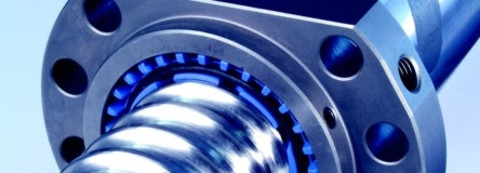
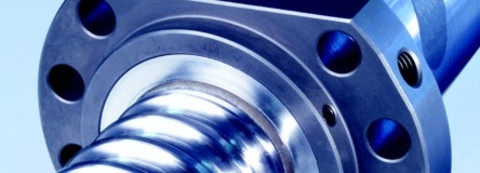
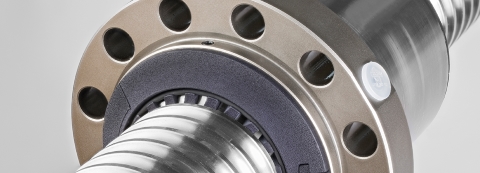
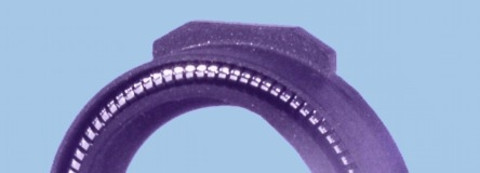
Depending on the application, segment wipers, felt wipers, or double wipers (a combination of the first two types) are used.
We also offer specialized versions – for example, dedicated wipers for woodworking applications or designs with ice scrapers for extreme environmental conditions. The wipers effectively protect the mechanism from dust, moisture, and other contaminants while simultaneously preventing lubricant from exiting the nut.
How do environment and media influence the lubrication strategy?
The operating conditions at the application site are crucial for selecting lubricant and wipers. Dust, moisture, and contaminants should be kept outside the nut through the proper lubrication strategy.
The influence of environmental conditions on the lubricant becomes clear through temperature effects: High temperatures accelerate grease aging, while low temperatures increase viscosity. The lubricant must be selected accordingly. Conversely, the chosen lubricants and materials can also affect the environment: Vacuum environments, for instance, place special demands on preventing abrasion and outgassing of the lubricants used.
The lubrication strategy should therefore always be individually adapted to the environmental conditions.
When does centralized or automatic lubrication make sense?
Connection to a centralized lubrication system is particularly recommended when frequent relubrication is required and/or the installation location is difficult to access. This typically applies to systems with multiple axes.
Automatic lubrication ensures consistent lubricant dosing with minimal manual maintenance effort.
How is a ball screw properly cleaned?
Use only suitable, residue-free cleaning agents. Avoid aggressive solvents, highly compressed air, or cleaning agents with abrasive components, as these can damage the raceway and wipers. After each cleaning, relubrication is mandatory.
Which testing and monitoring methods support lubrication planning?
Torque, temperature, and noise monitoring provide valuable insights into the current lubrication condition. Visual inspections of the lubricating film and seals enable early detection of wear.
Condition monitoring systems such as the Steinmeyer GuardPlus System enable demand-based relubrication with predictable maintenance intervals.